


1 min read
NPS with AktivBo – More Than Just a Number
Measuring tenant loyalty using the Net Promoter Score (NPS) is powerful – but only if the data is used correctly. At AktivBo, we combine NPS with...
3 min read
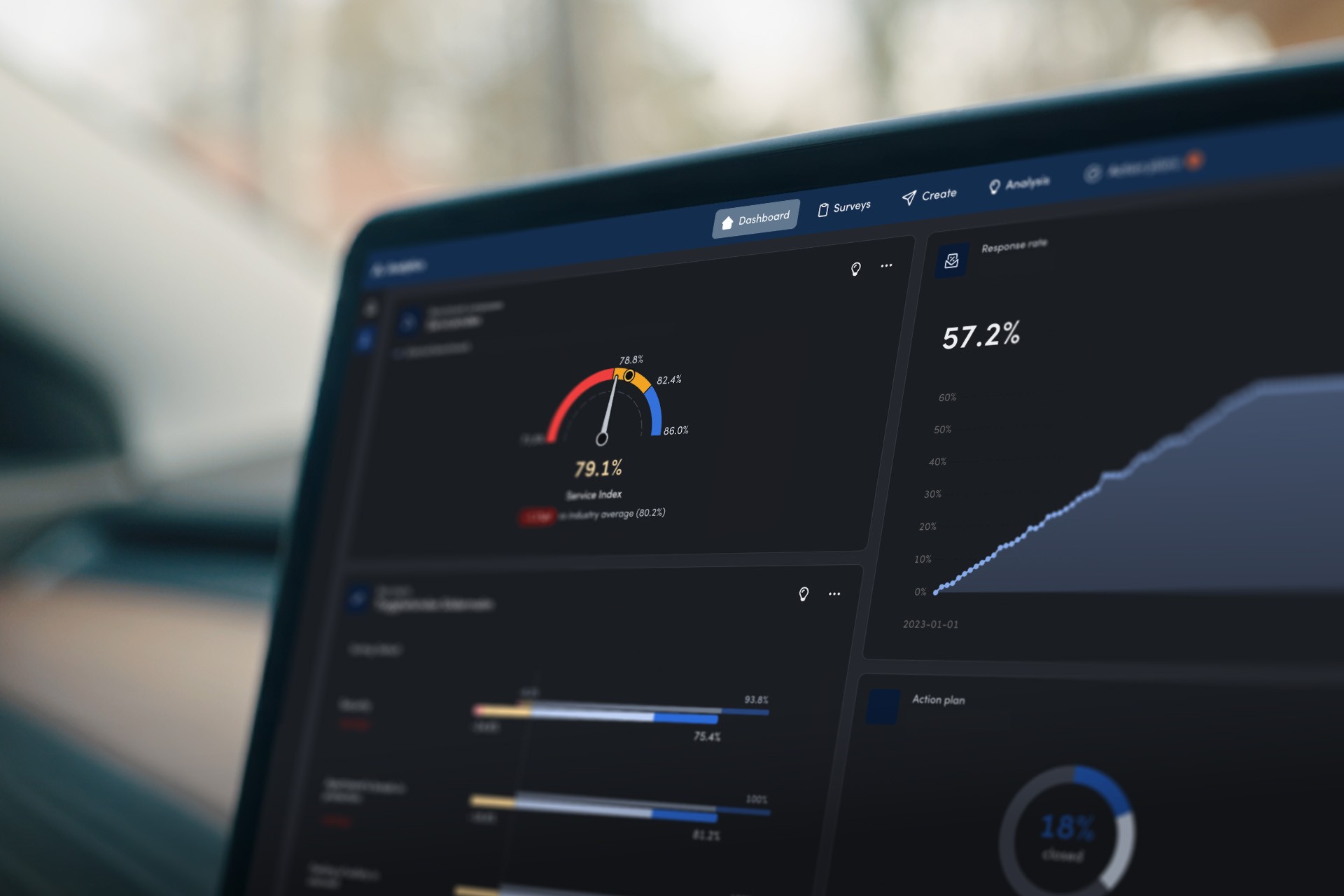
Analyzing tenant survey responses effectively is crucial to making the right decisions and creating lasting improvements — whether for residential or commercial properties. With experience spanning over 20 countries, AktivBo has developed a proven method and analytics platform, AktivBo Analytics, tailored for the real estate sector, enabling you to transform tenant feedback into actionable insights. Below is our seven-step guide.
Start by analyzing the overall results to get a clear picture of key indices and sub-indices, such as Service Index, Product Index, and Safety Index. Filter and segment the results by property, area, or tenant type to gain a more nuanced understanding of what drives the overall outcome.
To maximize the value of your surveys, it is important not only to look at the aggregate numbers but also to dig deeper into the individual answers. Identify which properties or areas perform poorly on a given index or sub-index, and then explore the specific questions where tenants express the greatest dissatisfaction. This level of detail helps you direct efforts and resources where they are most needed.
A key component in understanding tenant sentiment is tracking how a specific index, sub-index, or question changes over time. Use the Curves feature in Analytics to visualize how results evolve in line charts, segmented by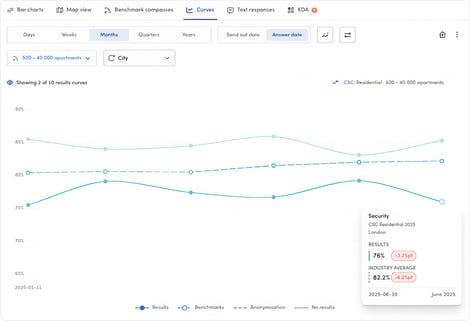 day, week, month, or year.
This allows you to determine whether a decline is temporary or part of a longer-term trend. Is it a one-off issue likely to resolve itself, or should you allocate sustained resources to break a negative spiral? Understanding trends helps you prioritize the right actions at the right time.
In real estate, it is especially valuable to place your results in context. AktivBo's platform offers benchmarking against other companies on indices, sub-indices, and individual questions across more than 20 countries. This gives you the opportunity to see how your properties and areas compare with similar portfolios.
An often underutilized function is internal benchmarking — comparing results among your own properties or areas within your portfolio. By highlighting both top and bottom performers, you gain insights into what works well and where improvement efforts are most needed. Internal benchmarking provides a clearer picture of variation across your portfolio and enables more precise actions to enhance both tenant satisfaction and operational efficiency.
Open-ended text responses are often the richest source for understanding tenants' needs. AktivBo Analytics offers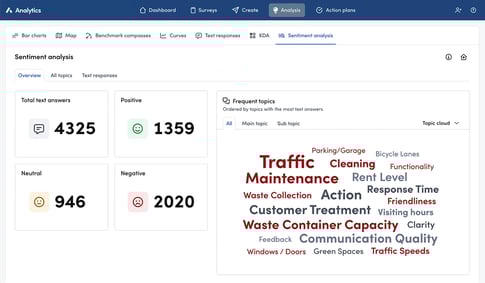 advanced semantic analysis powered by AI, enabling you to quickly and effectively interpret free-text comments.
Using artificial intelligence and natural language processing, the platform identifies themes and recurring patterns and categorizes responses automatically. This provides deeper insight into tenant experiences and helps you prioritize accordingly. The semantic analysis helps you understand not just what is said, but how it is said, enabling more purposeful and responsive actions, whether for residential or commercial properties.
Gathering tenant feedback is the first step, but it is in the follow-through where value is realized. To truly enhance the tenant experience, a systematic approach is needed, one where insights are converted into concrete improvements. This is where action plans play a decisive role.
AktivBo's Action Plan Tool is integrated into the Analytics platform and uses AI, among other techniques, to transform tenant responses into clear improvement suggestions and structured action plans. By automatically identifying areas for improvement, property owners and managers can act faster, more accurately and with full transparency.
For optimal effect, actions should be created at operational levels — by property, by area, or for individual tenants. This is where improvements make the greatest everyday difference. Each action should have an assigned owner, a target date, and a clear description. By linking each action to a specific survey question, you can monitor the impact and see exactly how each initiative affects tenant satisfaction over time.
Once you have analyzed and understood the results, the next step is to communicate the insights across the organization — from on-site property staff to senior management. Use the results to set clear goals for service, maintenance, and responsiveness, and to follow up on the actions you have implemented.
Contact us for a conversation about how AktivBo Analytics can support your improvement efforts — from data collection to concrete action.
1 min read
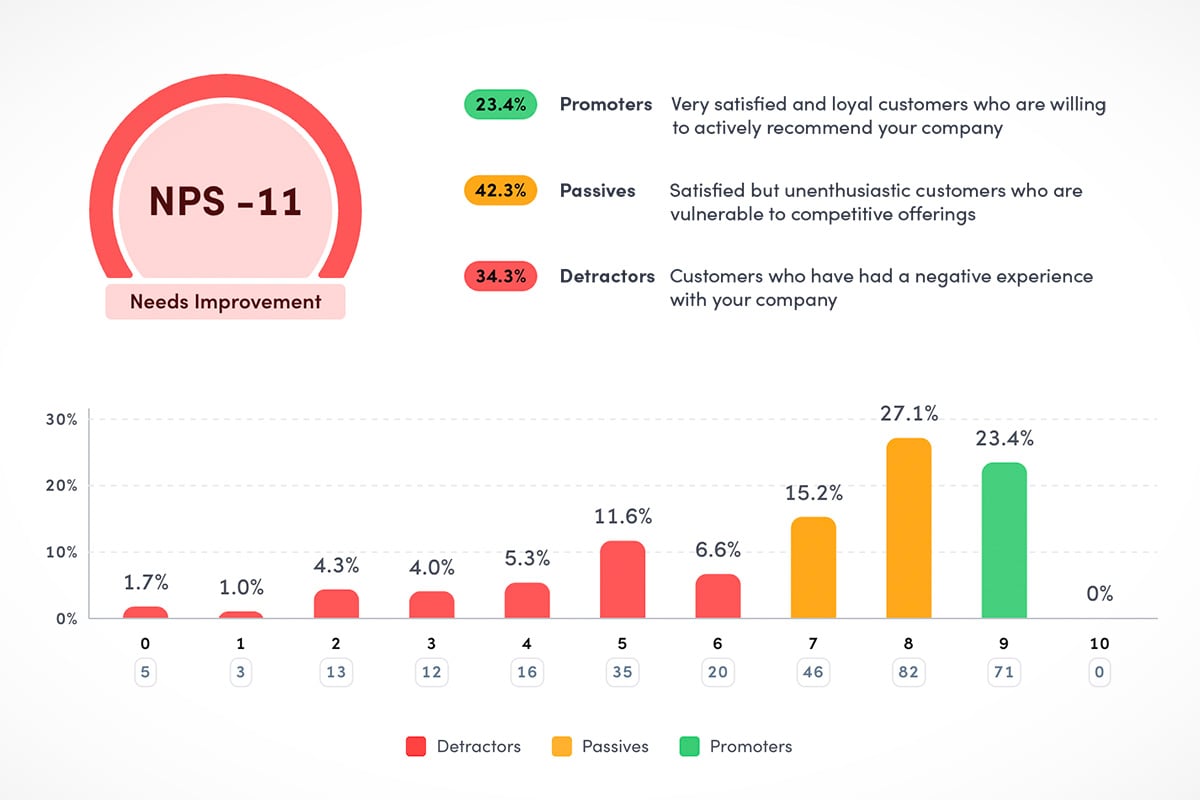
Measuring tenant loyalty using the Net Promoter Score (NPS) is powerful – but only if the data is used correctly. At AktivBo, we combine NPS with...

1 min read
In a time when the real estate industry faces growing demands for transparency, sustainability, and economic efficiency, the question of tenant...

1 min read
At AktivBo, we know that progress is driven by people. Introducing Jon Svensson, CEO of AktivBo Group, who has spent many years advocating for...